SPECIAL CHRISTMAS AUCTION, DECEMBER 29, 2025 - 1st SESSION: ASIAN ART
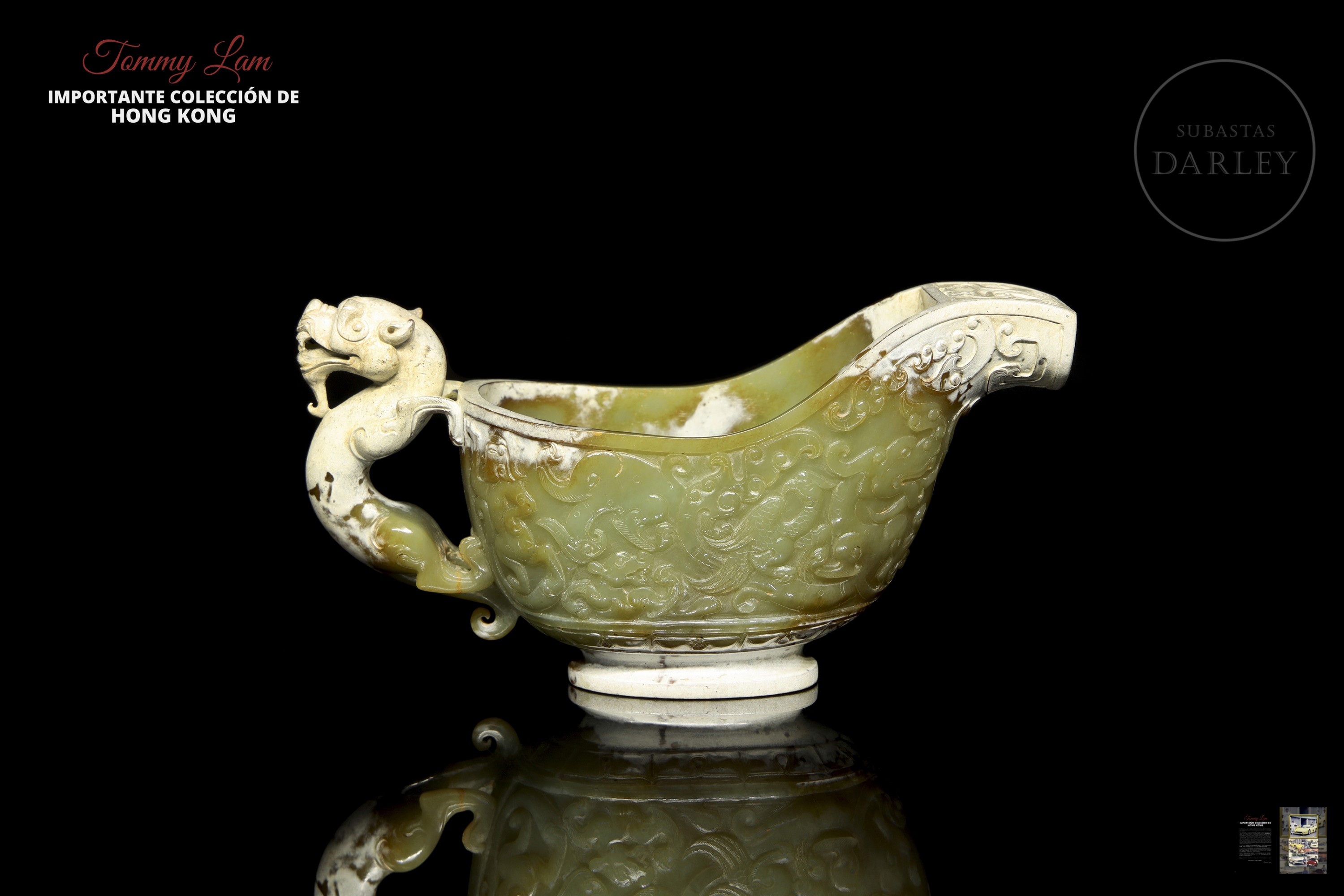
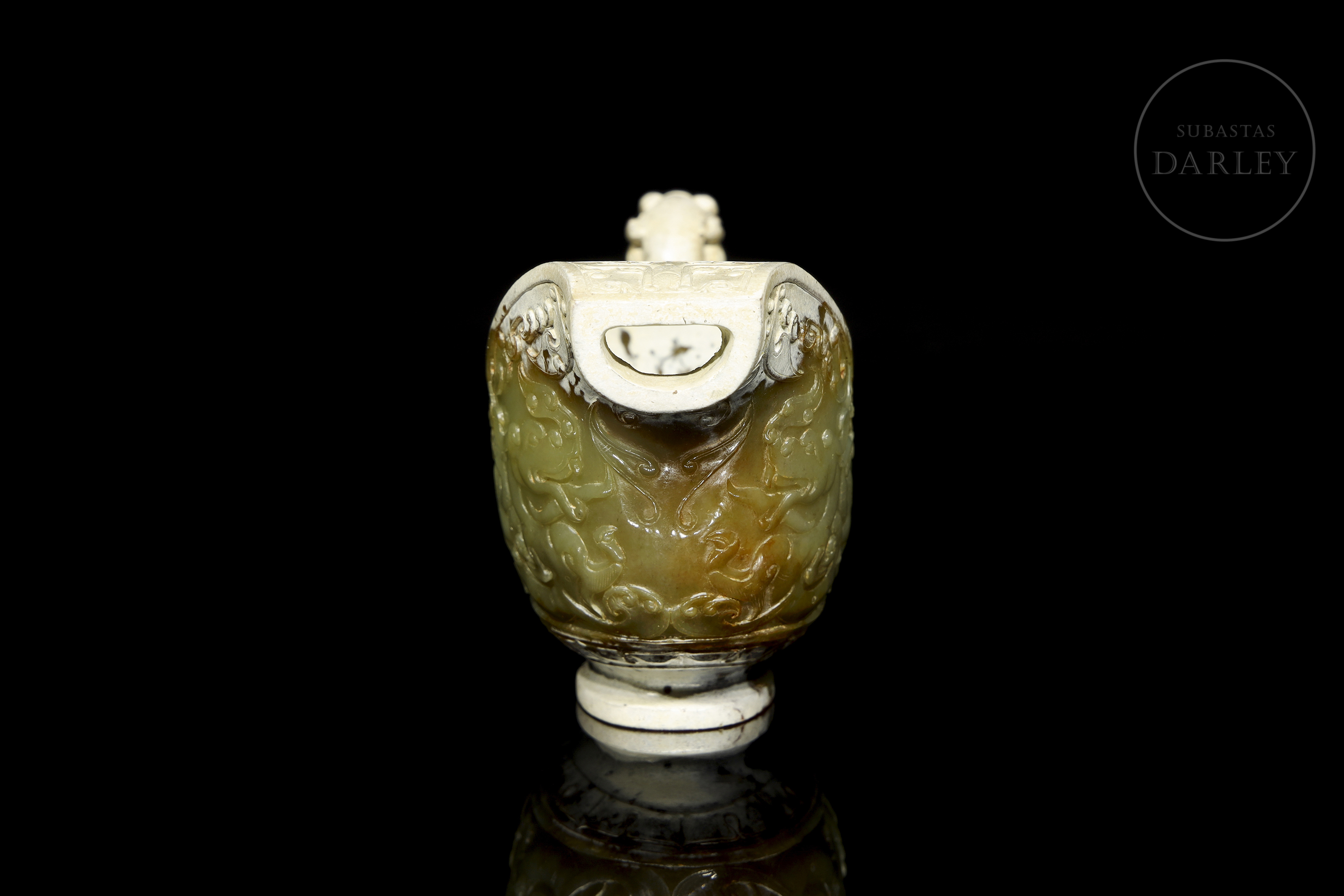
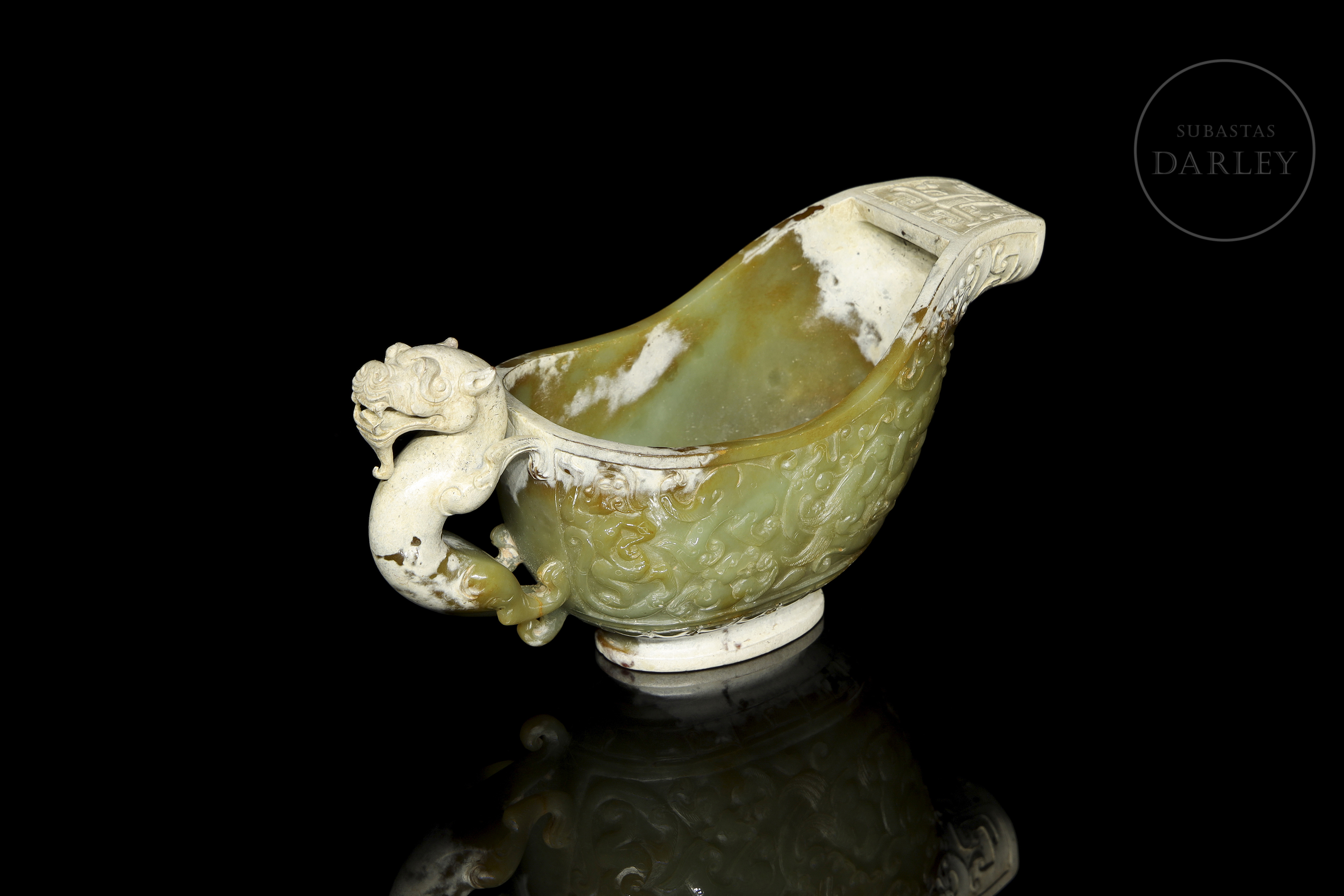
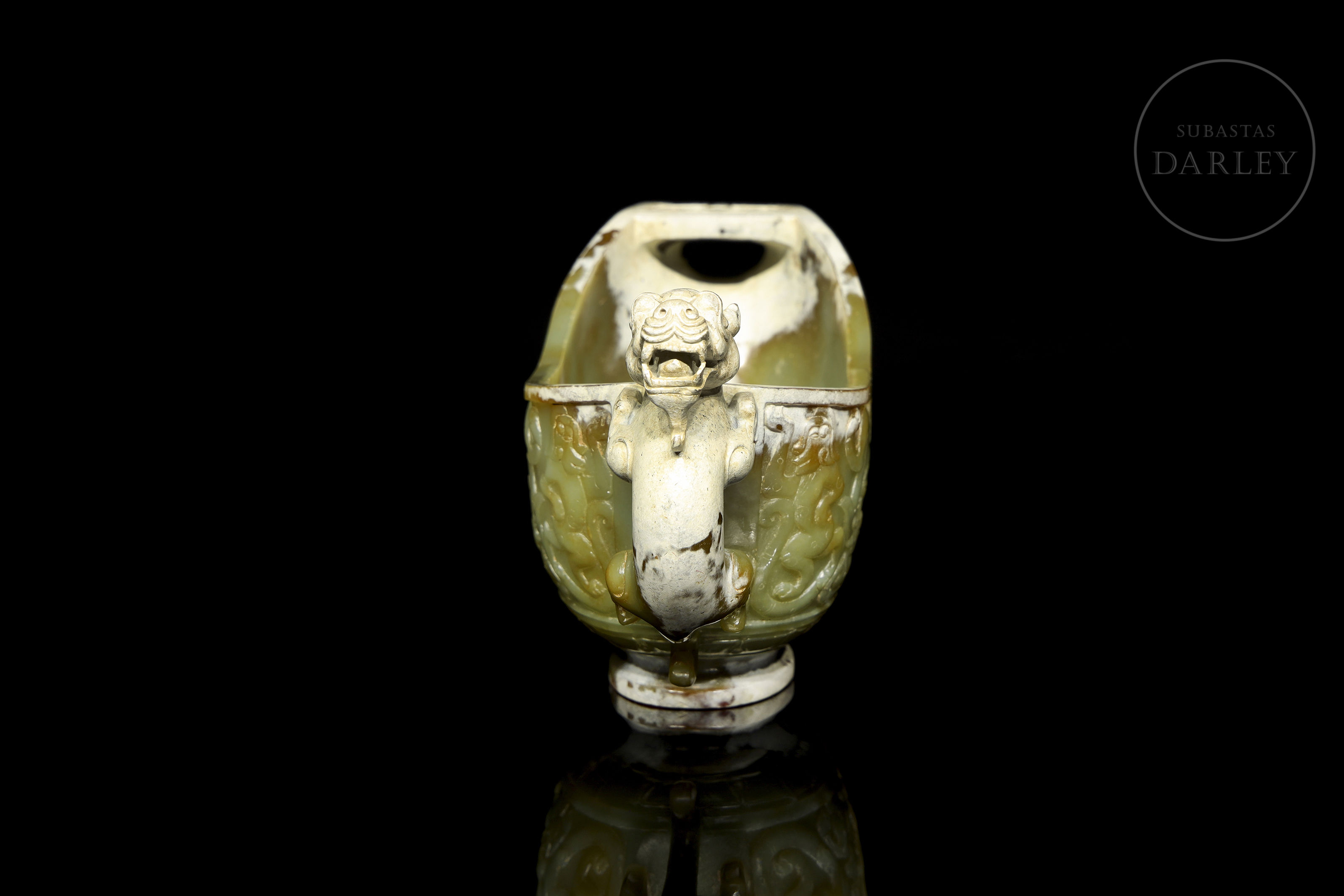
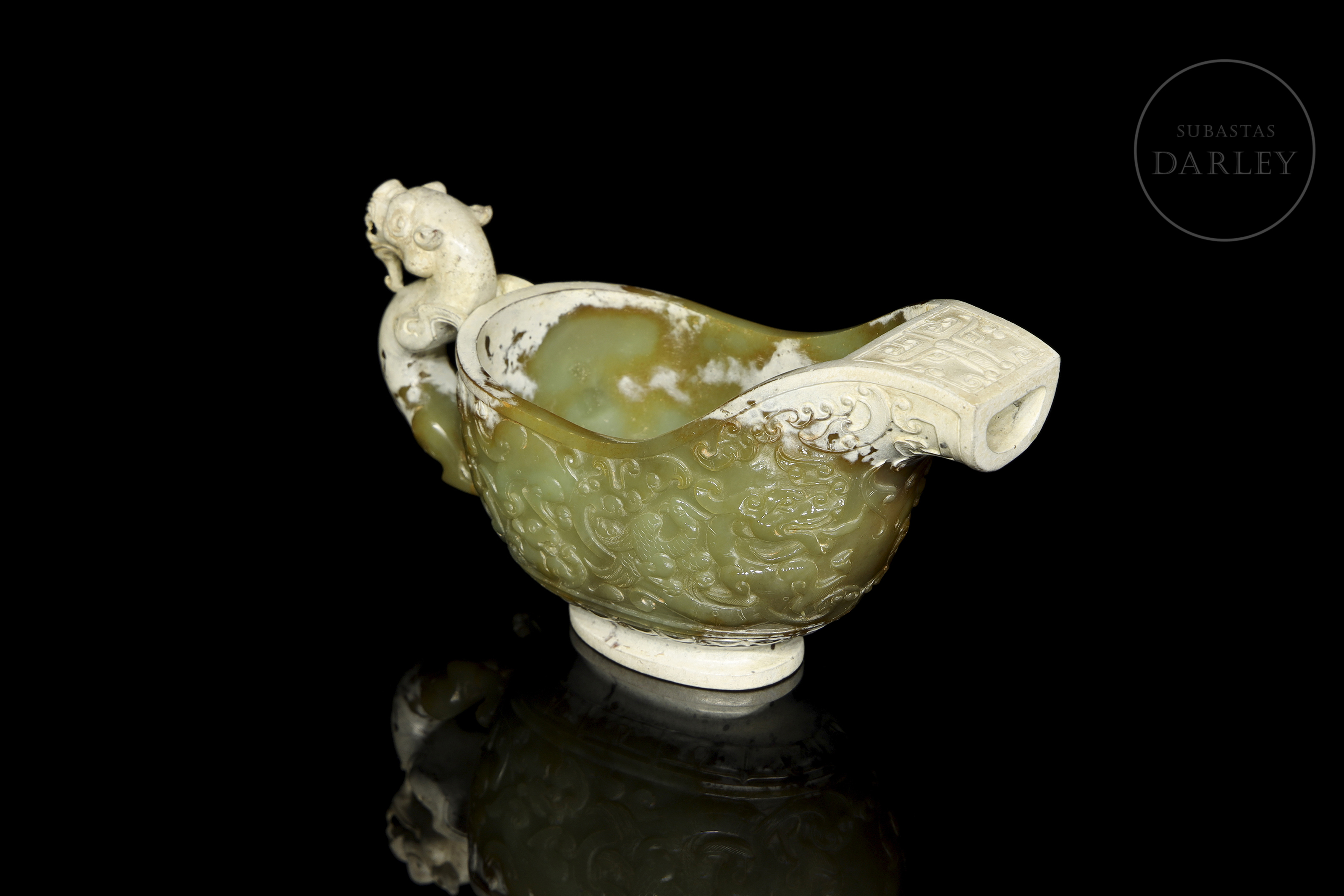
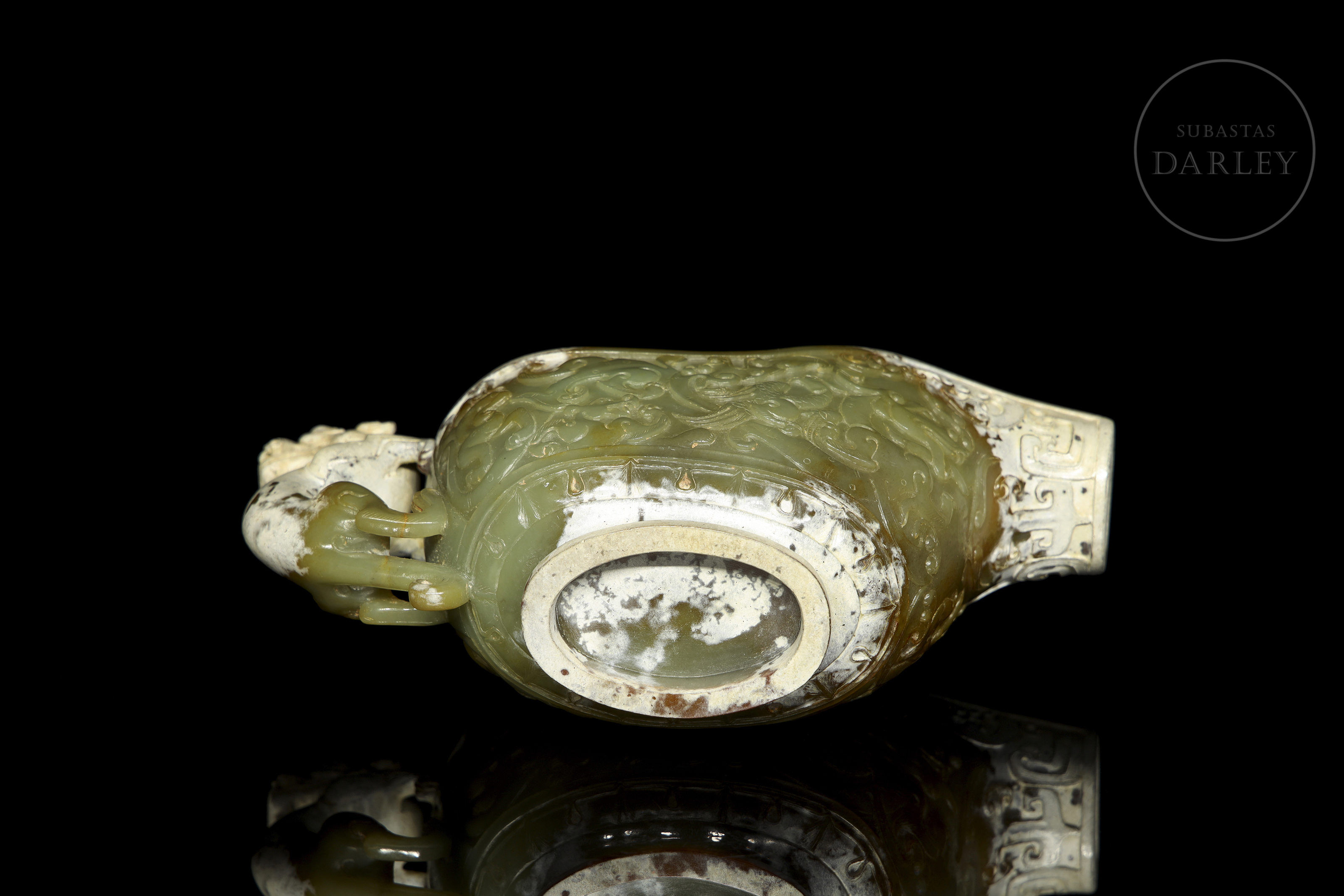
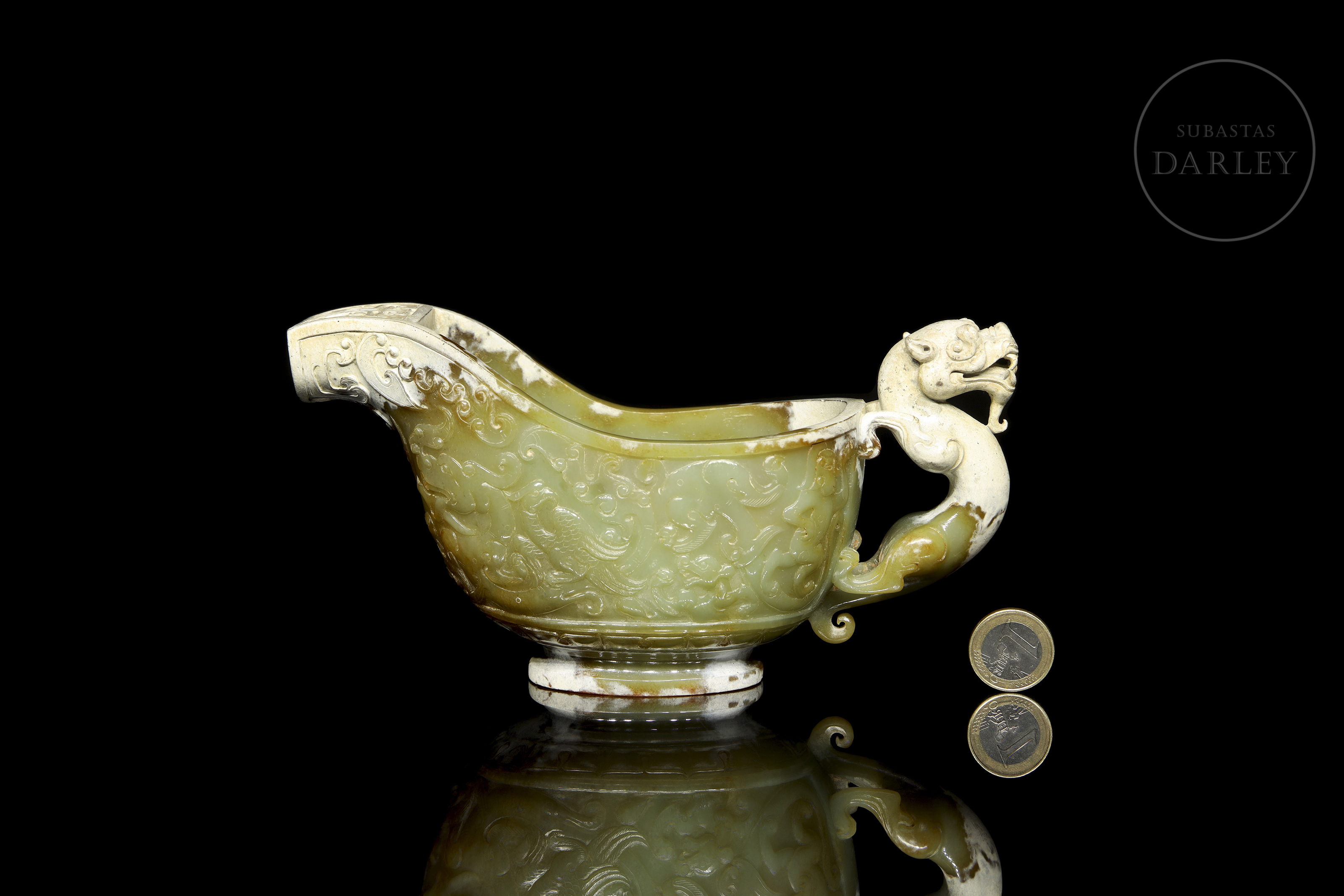
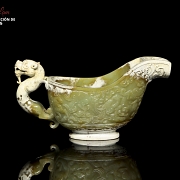
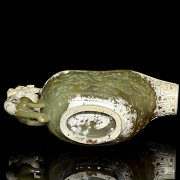
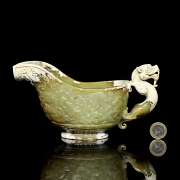
Yellow jade libation vessel, Western Han dynasty
Press 'Program an autobid'in order to confirm
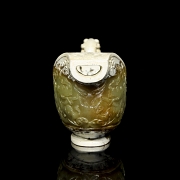
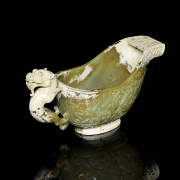
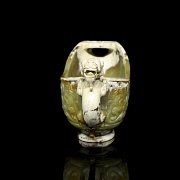
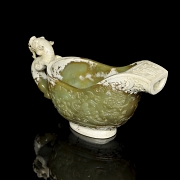
Exceptional archaic-style jade libation vessel, reminiscent of the shapes of ritual bronze yí vessels (匜), carved from translucent yellow jade with an extensive patina of calcification in milky white tones, evidence of its age. The globular body is carved in low relief with a dense and intricate pattern of dragons intertwined with phoenixes and scrolls. The handle, carved in the round and openwork, shows an imposing dragon with its head turned in a protective attitude. The wide, fluted spout also features archaic-style decoration on its upper part. Western Han Dynasty (206 BC - 25 AD). or later.
Size: 10 x 7.8 x 20 cm
Weight: 478 g
Provenance:
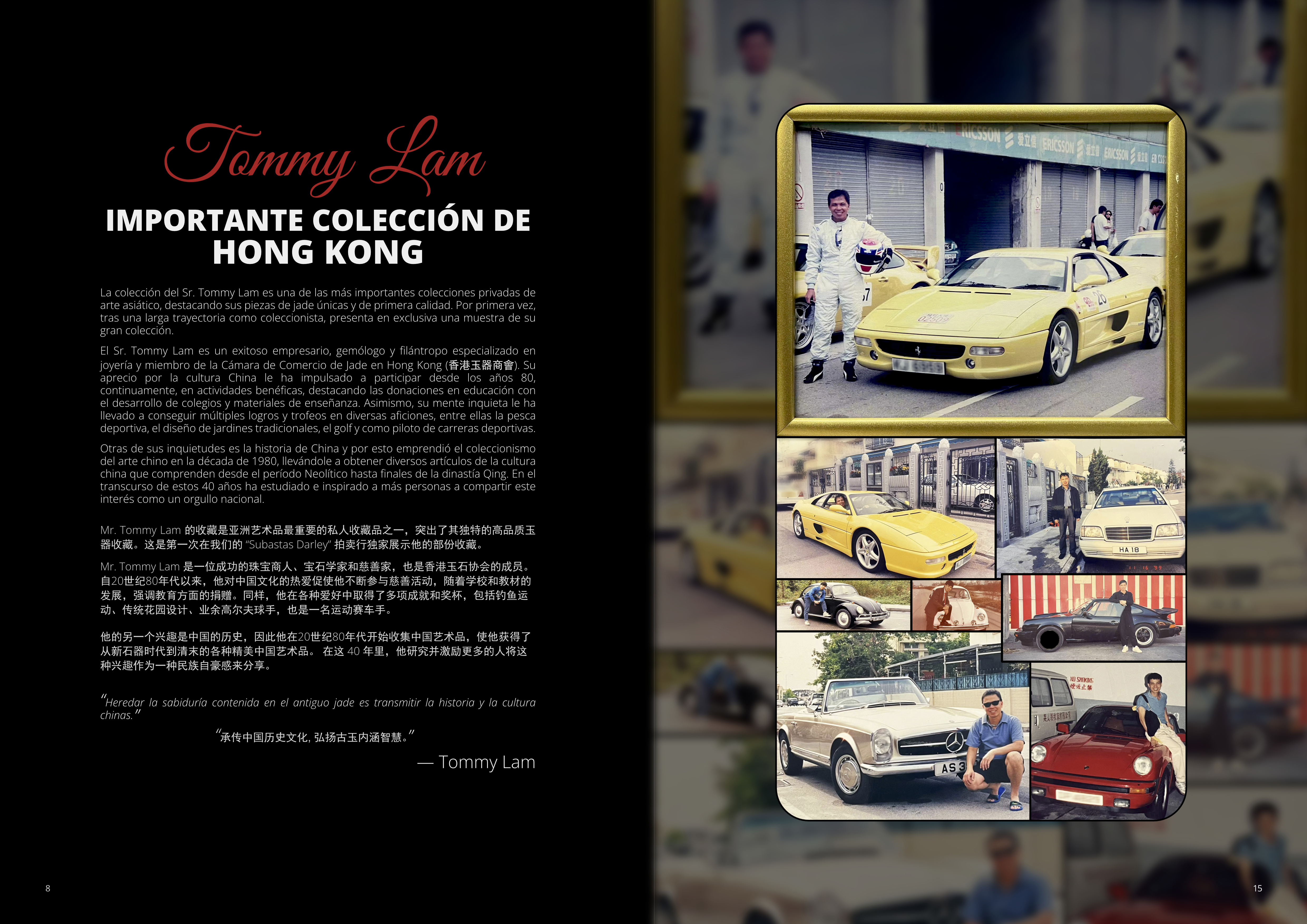
· Important collection from Tommy Lam, Hong Kong, since 1980
Catalogue note:
The use of jade to recreate the shapes of archaic bronze vessels, such as the yí vessel (originally used to pour water in hygiene rituals), is a practice characteristic of the Han dynasty. During this period, unlike in previous dynasties (Shang and Zhou) where bronze dominated ritual vessels, jade became the material of choice for the elites, symbolizing spiritual purity and social status. This was not only a change in material, but also reflected an evolution in use: jade pieces, while retaining reverence for archaic forms, were produced not only for strictly ritual or funerary ceremonies, but also as prestigious personal objects used by the emperor and the high nobility in their daily lives, in accordance with the Confucian philosophy that equated the incorruptibility of jade with the moral integrity of a gentleman.